From Sample to Mass Production: Packaging Workflow Explained
A Step-by-Step Look at How Custom Packaging Moves from Concept to Finished Boxes
I often tell clients this: most packaging problems don’t happen in mass production.
They happen before mass production even starts.
A clear, professional packaging workflow turns ideas into consistent, scalable results. When every step is confirmed—sampling, approval, QC, and timing—risk goes down and confidence goes up.
Let me walk you through what really happens behind the scenes.
What Really Happens Between Sampling, Approval, and Bulk Production
This stage decides everything that comes next.
Sampling is where assumptions meet reality, and approval is where responsibility becomes shared.
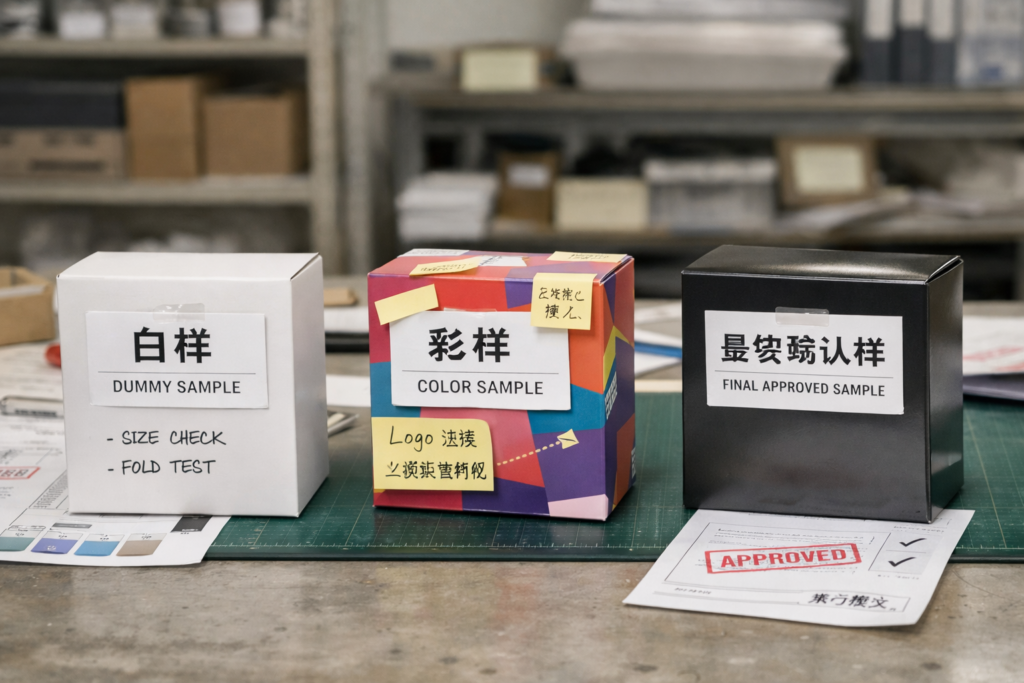
After a design is ready, the workflow usually follows this path:
- Dieline confirmation
- White sample for structure
- Color sample for appearance
- Final approval for mass production
Each step answers a different question:
- Does it work?
- Does it look right?
- Are we aligned?
Skipping or rushing any step often leads to problems later—and they’re always more expensive then.
Key Checkpoints That Ensure Your Packaging Is Right Before Mass Production
Think of checkpoints as safety nets.
Professional factories use clear checkpoints to catch issues early—before they become costly mistakes.
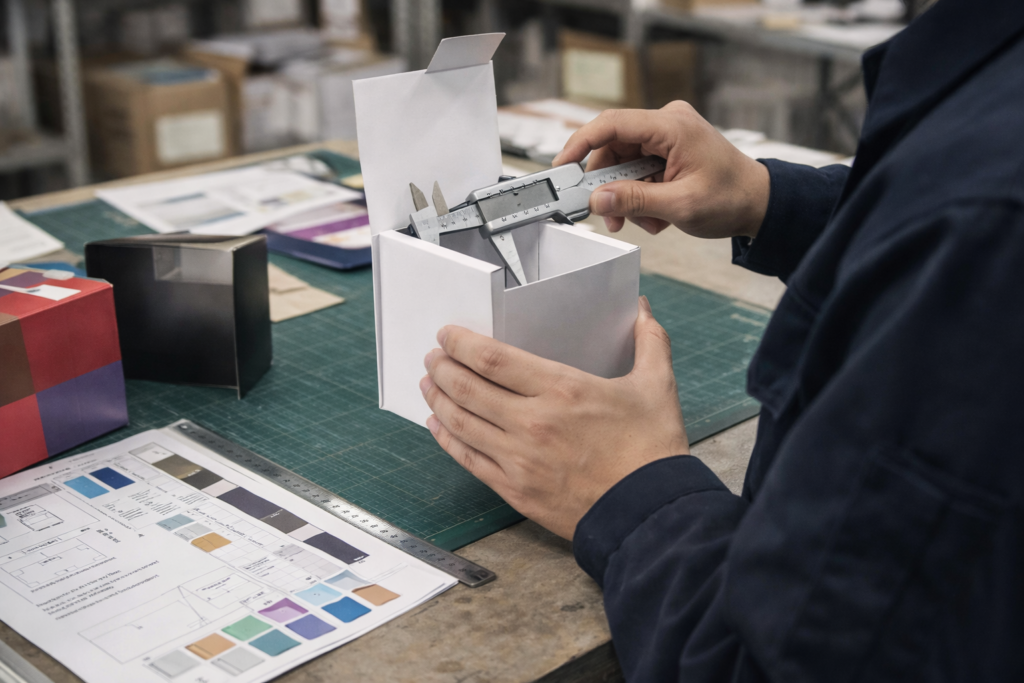
Key checkpoints usually include:
- Structure test (strength, fit, assembly)
- Material confirmation
- Color and finish approval
- Artwork alignment check
I’ve seen clients feel “too busy” for these steps.
They usually regret it.
A ten-minute confirmation today can save weeks of trouble later.
How Professional Packaging Factories Control Quality at Every Stage
Quality doesn’t start at the end.
Good factories control quality during every stage—not just during final inspection.
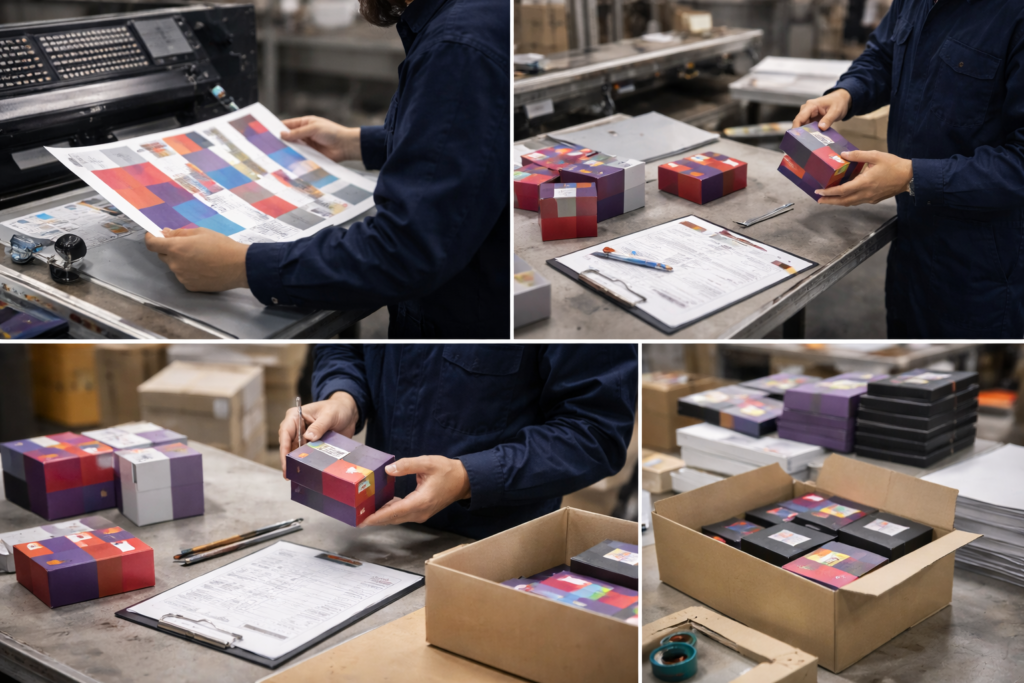
In our daily workflow, QC happens:
- Before printing
- During printing
- After finishing
- Before packing
This includes:
- Color consistency checks
- Structure and tolerance checks
- Finish adhesion tests
Quality control is not about catching mistakes.
It’s about preventing them.
Why Sampling Is Critical—and How It Reduces Costly Production Risks
Samples are not a delay.
They’re insurance.
Sampling exposes risks early, when changes are still easy and affordable.
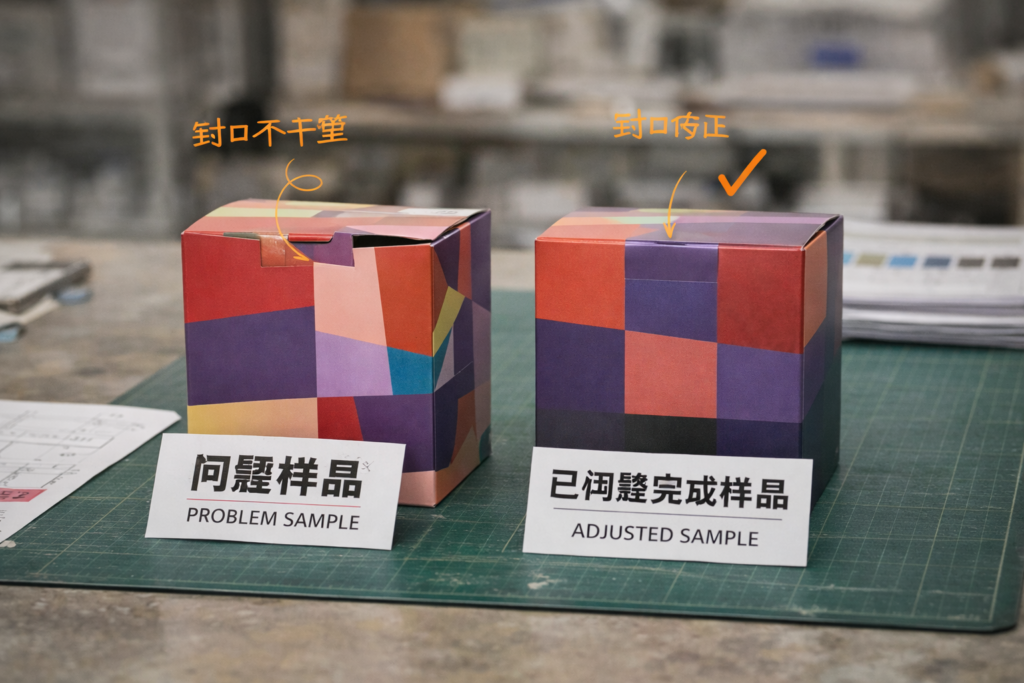
Samples help verify:
- Structural strength
- Color accuracy
- Finishing results
- User experience
I always say this to B2B buyers:
Fixing a mistake on a sample costs almost nothing.
Fixing it after bulk production costs trust.
From Dieline to Delivery: Inside a Reliable Packaging Production Workflow
A good workflow feels calm—even with tight timelines.
Clear steps from dieline to delivery keep projects predictable and scalable.
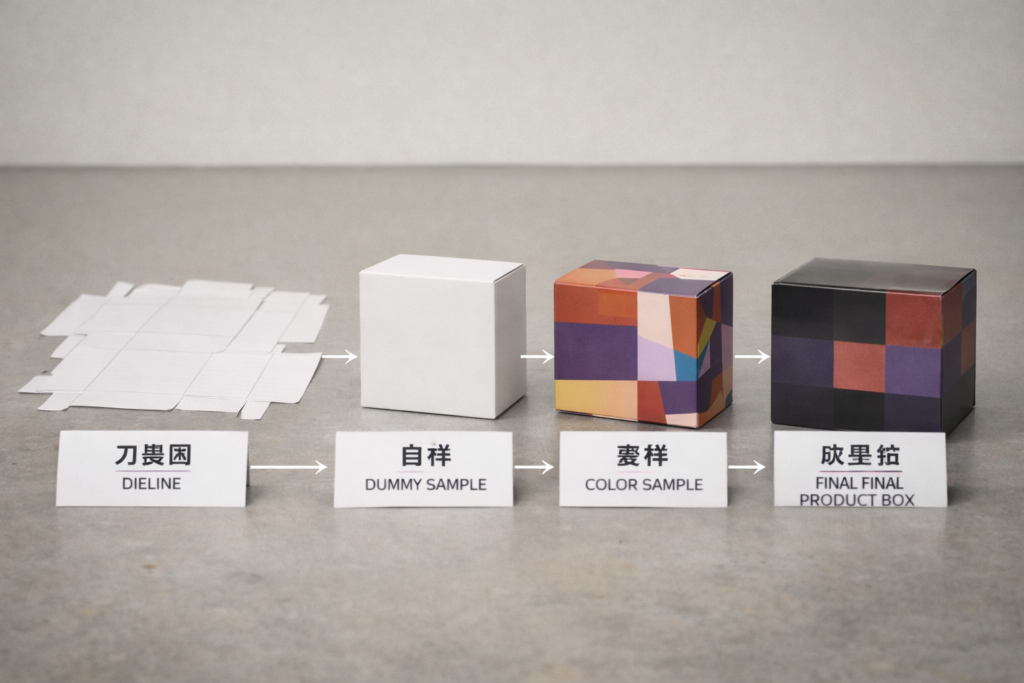
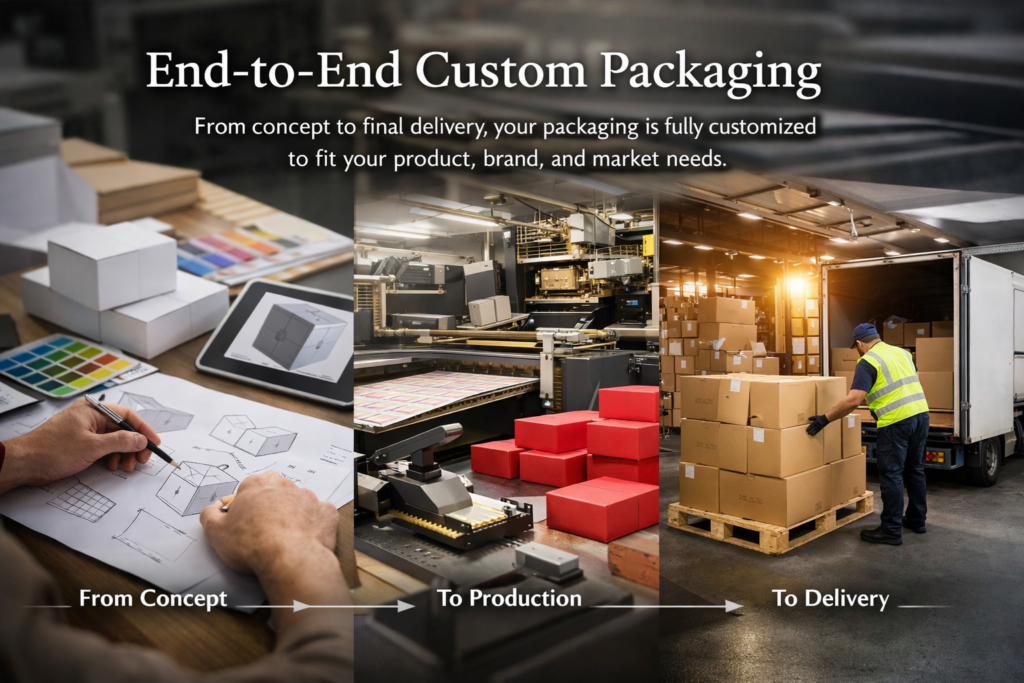
A typical workflow looks like this:
- Dieline & artwork confirmation
- White sample
- Color sample
- Bulk production
- QC inspection
- Packing & shipment
Each step builds on the last.
No guessing. No shortcuts.
How Clear Communication and Confirmations Prevent Packaging Errors
Most errors are not technical.
They’re human.
Clear communication and written confirmations prevent misunderstandings across time zones and teams.
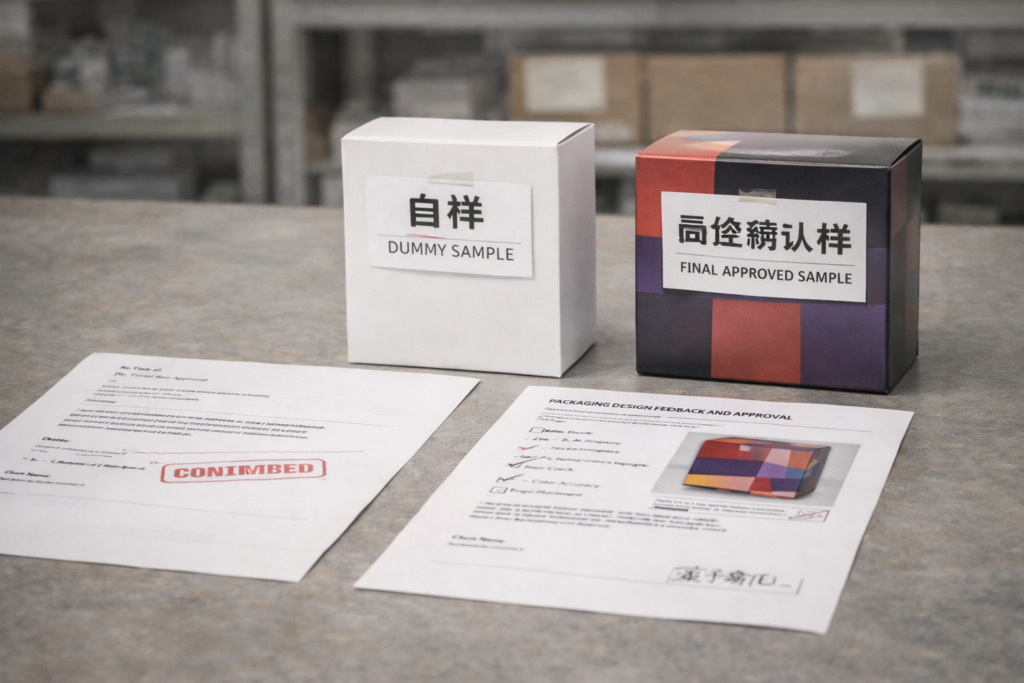
Simple habits make a big difference:
- Written approvals
- Marked-up photos
- Final spec summaries
When everyone agrees on one version of truth, mistakes disappear quietly.
Understanding Lead Times, QC, and Approvals in Custom Packaging Projects
Timing is part of quality.
Understanding lead times helps buyers plan realistically and avoid rushed decisions.
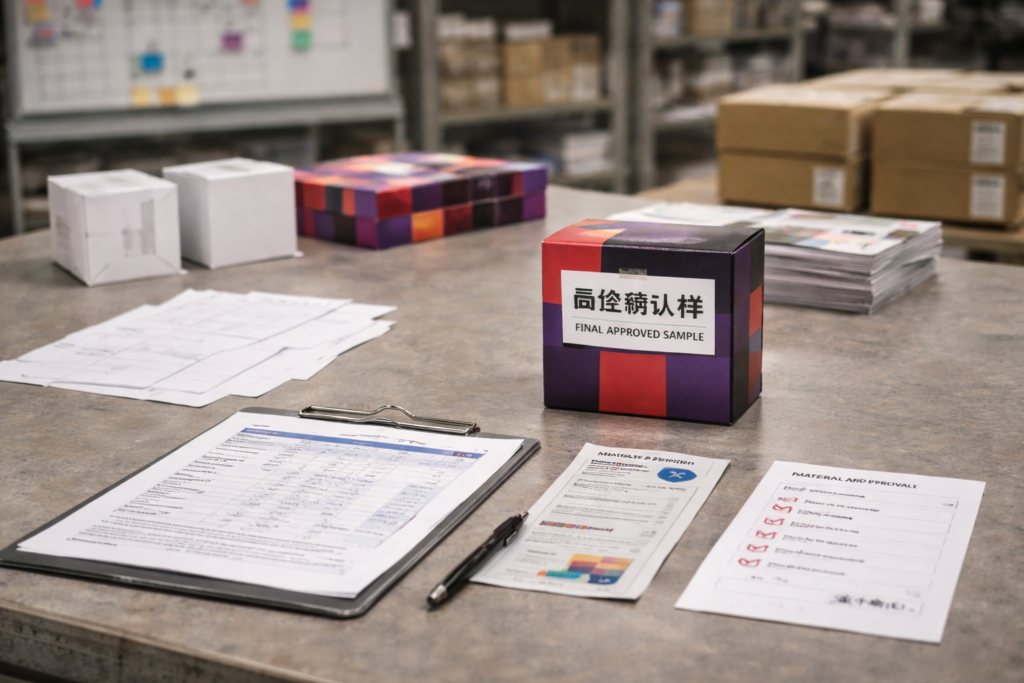
In most custom packaging projects:
- White samples take 1–3 days
- Color samples take 5–7 days
- Bulk production takes 25–30 days
Rushing steps often means:
- Higher error risk
- Limited QC
- Stress on both sides
Good planning feels boring—but it works.
What B2B Buyers Should Know Before Moving from Sample to Bulk Order
This moment deserves attention.
Before approving bulk production, buyers should confirm structure, materials, finishes, quantity, and delivery terms.
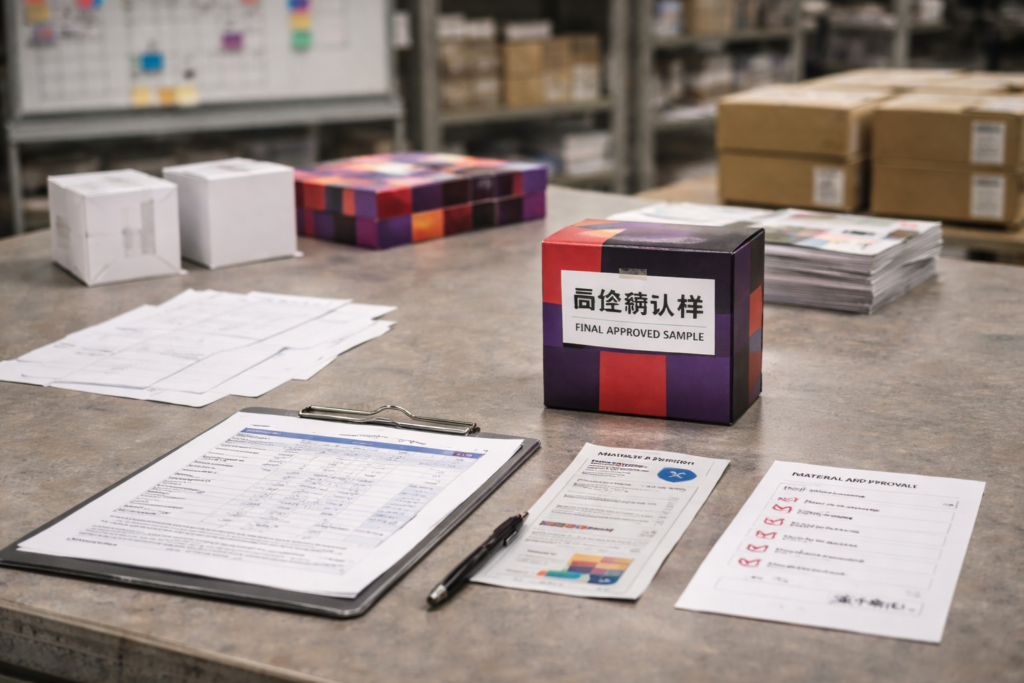
I usually suggest one final checklist:
- Sample matches expectation
- Specifications are written
- Lead time is confirmed
- QC standard is agreed
Once bulk starts, flexibility drops.
Clarity matters most here.
A Transparent Packaging Workflow Designed for Consistency, Quality, and Scale
Transparency builds confidence.
A clear workflow helps brands scale without losing quality or control.
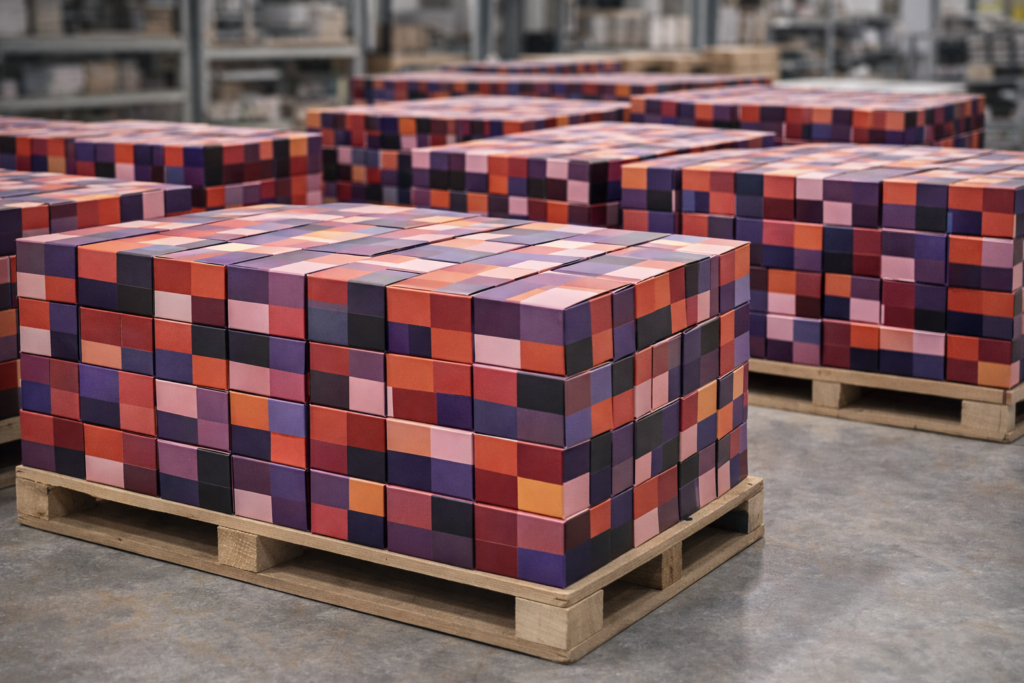
When buyers understand the process:
- Decisions become easier
- Communication improves
- Long-term cooperation grows
Good packaging isn’t just about boxes.
It’s about trust built step by step.
Conclusion
A strong packaging workflow removes surprises.
That’s how good samples become great mass production.